
Endgame Influences: How Football Added Time, Tennis Deciders, and Horse Racing Finishes Alter Accumulator Trends
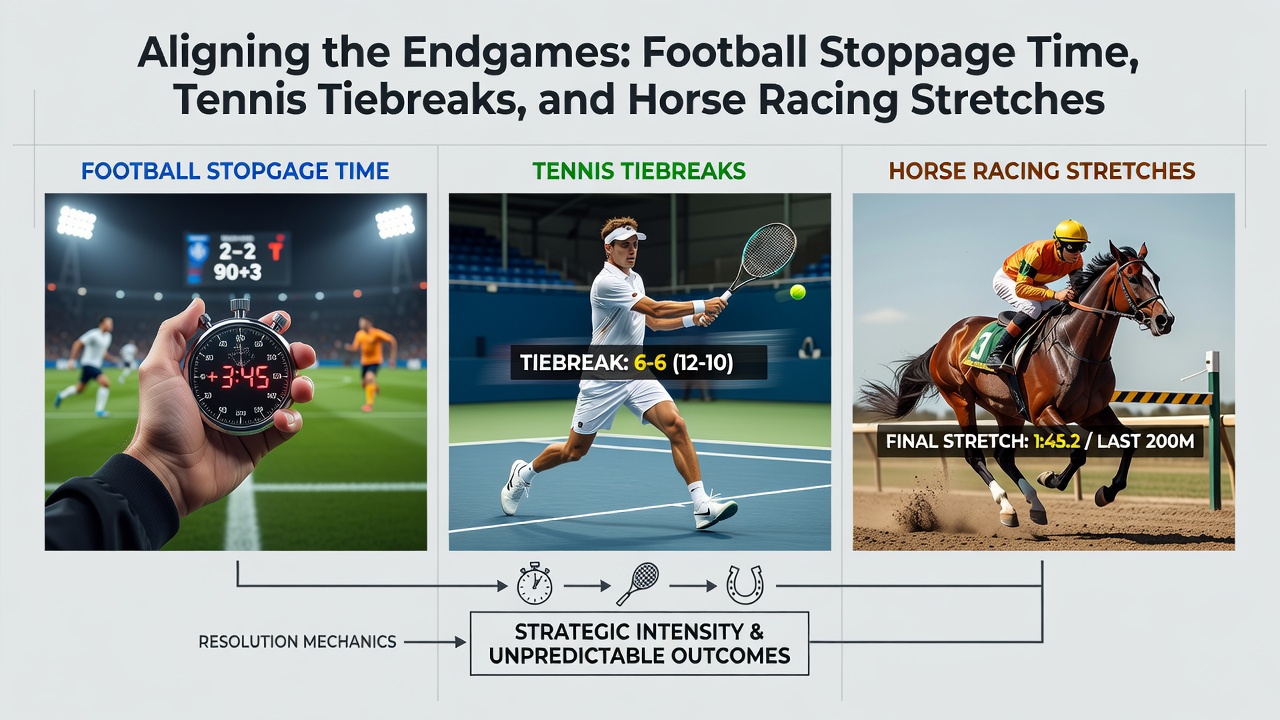
Football stoppage time, tennis tiebreaks, and horse racing final stretches create distinct pressure points that shift how bettors construct and adjust multi-fold wagers across these sports; observers note that these phases often concentrate scoring or performance changes into short windows, which in turn affects payout structures for accumulators that combine selections from different events.
Data from major sports seasons shows that goals in football added time occur at rates roughly 20 percent higher than average match minutes according to league tracking systems, while tennis tiebreaks resolve sets in under 10 minutes on average yet carry elevated variance in player performance metrics. Horse racing stretches, particularly the final furlong, produce photo finishes in approximately 8 percent of races at major tracks, and analysts track how these outcomes correlate with late market adjustments in multi-leg bets.
Football Stoppage Time Patterns in Accumulators
Referees add time at the end of halves to account for interruptions, and this period has become a measurable factor in accumulator construction because late goals frequently decide whether a multi-bet leg pays out or voids. Research from European football federations indicates that teams trailing by one goal score in added time at higher frequencies during the 2025-2026 season compared with earlier years, prompting bettors to monitor injury reports and substitution patterns more closely before finalizing combined wagers. Those who study fixture schedules observe that matches involving teams with strong set-piece records tend to produce more stoppage-time events, which alters the implied probabilities embedded in accumulator odds.
Live betting interfaces update rapidly during these windows, and data shows increased volume in in-play adjustments for accumulators that include football legs when matches reach the 85th minute. Payout records from operators reveal that stoppage-time goals have contributed to higher accumulator success rates in specific leagues, particularly when bettors combine underdog selections with established favorites from other sports.
Tennis Tiebreaks and Their Role in Multi-Bet Structures
Tiebreaks decide sets when scores reach six games apiece, and their compressed format concentrates momentum shifts that affect how bettors layer tennis selections into larger accumulators. Performance statistics compiled by tournament organizers demonstrate that serve percentages drop by measurable margins in tiebreaks, creating opportunities for players who excel in shorter exchanges. Bettors who track head-to-head data often adjust their multi-fold combinations when a match heads toward a deciding tiebreak, because historical outcomes indicate greater unpredictability in those moments compared with standard games.
August 2026 schedules include several high-profile hard-court events where tiebreak frequency has risen in recent editions, and market analysis from sports data providers shows corresponding spikes in accumulator modifications during live play. Observers note that combining tennis tiebreak outcomes with football legs requires careful timing, since the rapid resolution of tiebreaks can influence whether remaining legs in a multi-bet retain value.
Horse Racing Final Stretches and Accumulator Adjustments
The final stretch in horse racing, typically the last 400 meters, determines many race results and directly impacts accumulator returns when bettors include multiple selections across cards. Jockey tactics and track conditions documented by racing authorities show that late surges or fades occur more frequently on certain surfaces, and these patterns influence the construction of doubles and trebles that span different meetings. Photographic evidence from photo finishes provides verifiable data that bettors use to refine future multi-fold strategies, particularly when distances and pace profiles align with historical trends.
Industry reports from Australian racing bodies highlight how stretch performance metrics have been integrated into predictive models used by professional syndicates, and similar approaches appear in European and North American markets. Those who monitor live odds note that late market movements during the final furlong often reflect updated probabilities that cascade into accumulator recalculations across platforms.
Cross-Sport Interactions in Multi-Fold Betting
Combining football stoppage time, tennis tiebreaks, and horse racing stretches within single accumulators introduces layered timing considerations because each phase resolves at different speeds and under distinct rules. Studies from sports analytics firms indicate that bettors who stagger their selections across these endgame moments achieve more stable variance in payout distributions, since the independent nature of the sports reduces simultaneous risk exposure. Figures from international gaming associations reveal growth in cross-sport accumulators during major calendar overlaps, such as the summer months when tennis majors coincide with flat racing festivals and extended football seasons.
Operators report that educational resources on timing these phases have increased engagement, and regulatory updates from bodies like the Australian Communications and Media Authority emphasize transparent disclosure of how endgame data feeds into odds compilation. Bettors who review historical accumulator logs find that late adjustments in one sport frequently preserve value in selections from the other disciplines when the overall structure accounts for these concentrated periods.
Conclusion
Endgame phases across football, tennis, and horse racing continue to shape accumulator patterns through measurable performance shifts and market responses, with data from multiple seasons underscoring their consistent influence on multi-fold outcomes. Observers tracking these elements note ongoing integration of timing data into betting frameworks as schedules progress into late 2026.