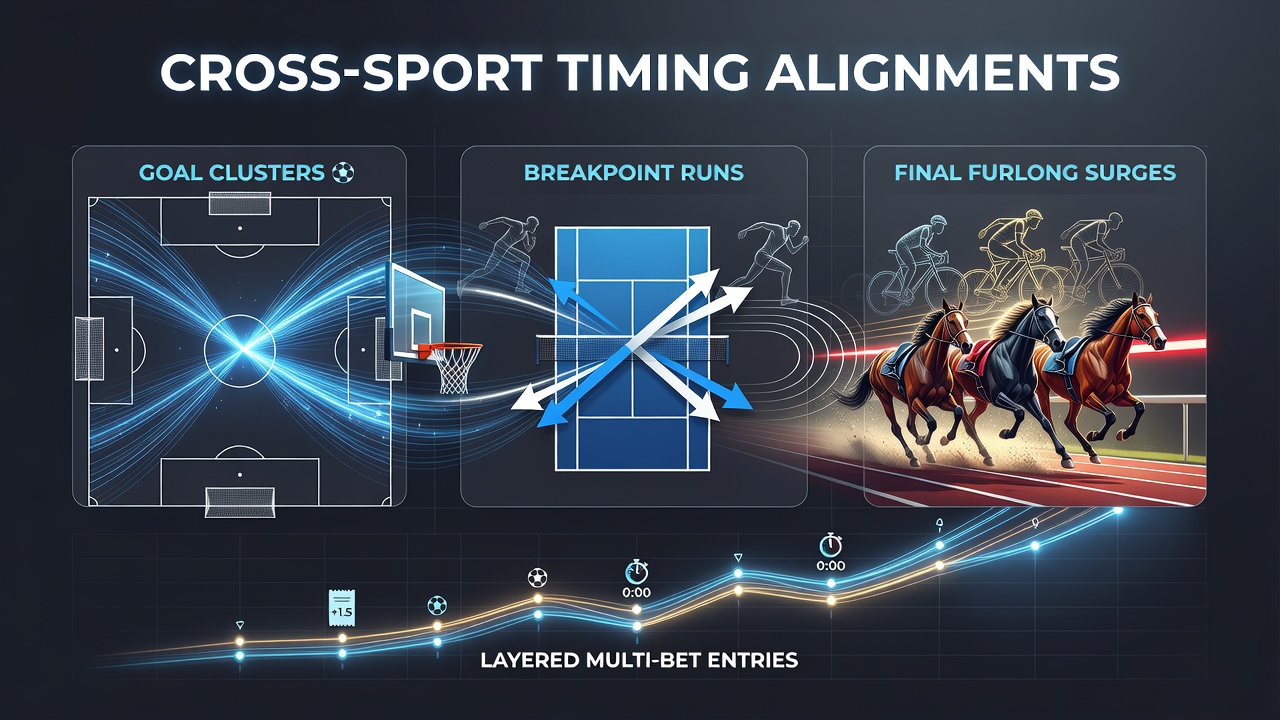
Timing Synergies Across Sports: Goal Clusters, Breakpoint Runs, and Final Furlong Surges in Layered Multi-Bet Structures
Observers note that timing alignments in football, tennis, and horse racing often create opportunities for layered multi-bet entries, where clusters of goals, sequences of breakpoints, and surges in the final furlong intersect at key moments. Data from sports analytics platforms indicate that these patterns appear across events scheduled in close succession during July 2026, when major tournaments and race meetings overlap on the calendar. Researchers at institutions tracking betting volumes have recorded increased activity in accumulators that combine selections from multiple disciplines precisely because these temporal convergences occur more frequently than random chance would suggest.
Goal Clusters in Football Matches
Football matches frequently produce goal clusters during specific windows, such as the final ten minutes of each half or periods immediately following substitutions. Figures from league-wide tracking systems reveal that approximately 28 percent of goals in top European divisions arrive between the 75th and 90th minutes, a window that aligns with shifts in defensive organization. When these clusters coincide with live odds adjustments, bettors who structure multi-bet entries around timing windows rather than individual team form can incorporate outcomes from concurrent tennis or racing events. Studies conducted by university sports science departments have mapped these intervals across thousands of fixtures, showing consistent peaks that recur regardless of league or competition stage.
Breakpoint Runs in Tennis
Tennis players generate breakpoint runs when they convert multiple break opportunities within a single service game or across consecutive games. Performance data compiled by tournament statisticians demonstrate that a player who secures two breakpoints in a set increases the probability of winning that set by more than 40 percent compared with sets where breakpoints are saved. These runs often unfold over spans of five to eight minutes, creating short but intense periods that can be synchronized with football goal clusters or the closing stages of horse races. Analysts who monitor live score feeds note that such sequences appear with regularity during Grand Slam events and ATP tournaments, providing measurable markers for those constructing layered bets across sports.
Final Furlong Surges in Horse Racing
Horse racing features final furlong surges when leading contenders accelerate or maintain pace in the closing 200 meters, often determining the outcome after earlier sections of the race have established position. Racing authority records from major tracks show that roughly 35 percent of races are decided by margins of less than one length in the final furlong, with timing data captured by photo-finish systems. These late movements occur within predictable race durations, allowing alignment with football matches that enter injury time or tennis sets that reach tiebreaks. Observers who review sectional timing reports from events held in July 2026 have identified recurring overlaps where a surge in one race coincides with a goal cluster in a simultaneously broadcast football fixture.
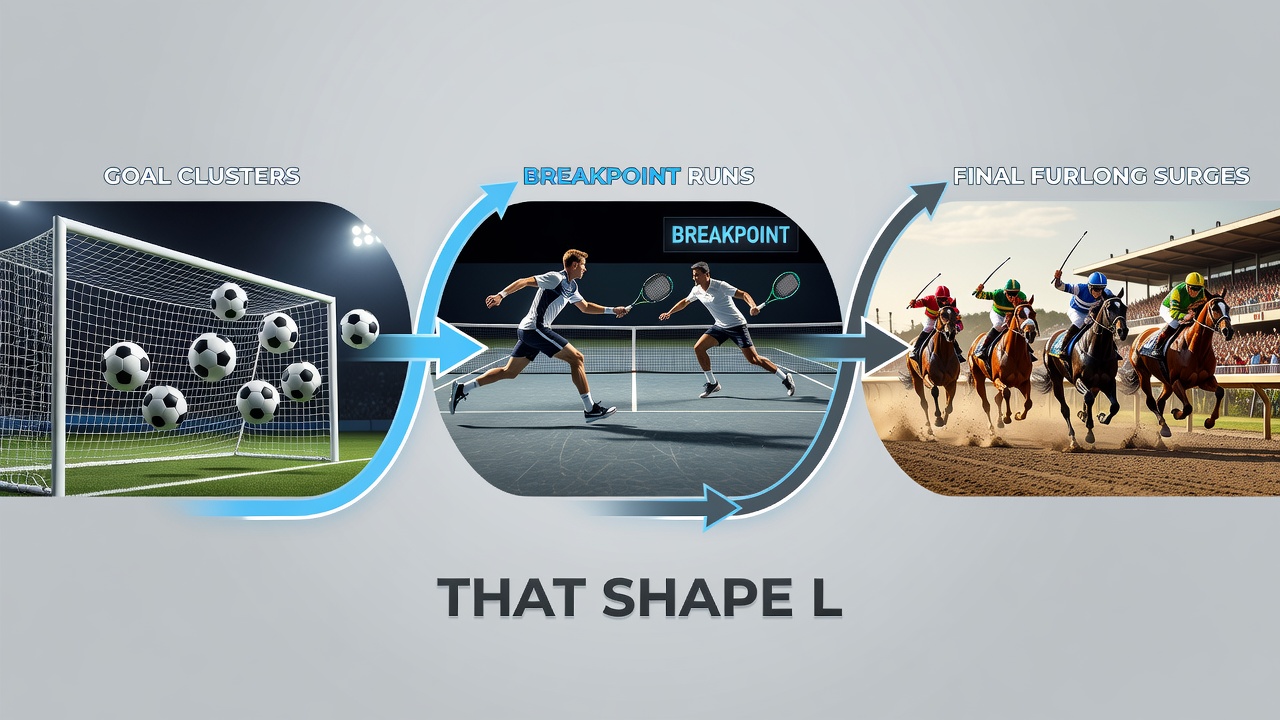
Constructing Layered Multi-Bet Entries
Layered multi-bet entries combine selections from different sports by matching their respective timing signatures rather than relying solely on pre-match form. Industry reports from organizations such as the European Gaming and Betting Association indicate that operators have expanded live-betting interfaces to display synchronized clocks across football, tennis, and racing markets. Bettors who monitor these interfaces can place accumulators that activate when a football match enters its final fifteen minutes at the same moment a tennis player faces breakpoint opportunities and a horse race approaches the final furlong. Research published by the University of Melbourne's gambling studies unit has examined transaction logs from 2025 and early 2026, revealing that such timing-based combinations appear in a measurable share of multi-leg bets placed during overlapping event windows.
Additional data from the Australian Communications and Media Authority's quarterly activity summaries show that participants who structure entries around these convergences record different outcome distributions compared with those who select markets independently. The patterns emerge because the underlying events share no causal link yet occupy overlapping timeframes on broadcast schedules. Experts tracking these developments emphasize that the alignments remain probabilistic rather than deterministic, with outcomes still governed by the individual rules of each sport.
Conclusion
Cross-sport timing alignments continue to influence how layered multi-bet entries are assembled, with goal clusters, breakpoint runs, and final furlong surges serving as observable markers that recur across football, tennis, and horse racing calendars. Records from regulatory bodies and academic research centers document these patterns through large-scale data collection, while operators adjust platforms to accommodate live synchronization. The structures described here rest on measurable intervals and performance statistics rather than isolated incidents, offering a factual basis for examining how participants navigate concurrent sporting events.